
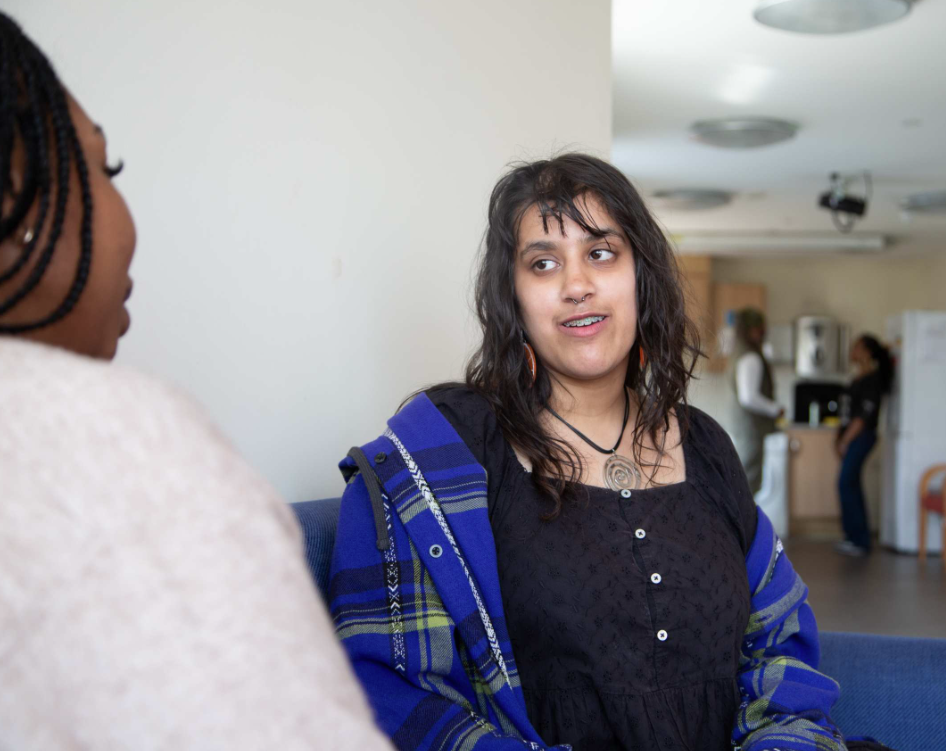
“I remember seeing this job advertised and thinking, ‘that’s me’. This is more than a job to me- it reflects who I am.”
Service Manager, Ife-Dapo, and her team support young people aged 18-25 years old in three supported accommodation services across London, including one service that is exclusively for women who’ve suffered trauma and abuse.
She says: “the goal is not only to help them feel safe, move into secure housing and avoid homelessness, but to support them to navigate their lives with confidence and take control of their future.
And when Ife-Dapo says the job, ‘reflects who I am’, she is talking about more than the day-to-day work, but about our Vincentian heritage and approach to working with young people – meeting them where they are, walking with them, showing up consistently, and celebrating their successes, however big or small.
She says:
“I’ve always believed in celebrating people, not just when things are going well, but throughout the entire journey. Whether it’s a small step forward or a big achievement, those moments matter and deserve to be recognised.”
Here Ife-Dapo tells us about the services she manages.
When a young person first arrives
The young people we support often come to us with past trauma, fractured relationships, or long periods where they’ve had to survive on their own, that means when someone first arrives, we keep things simple: a meal, a shower and a good night’s sleep. That stability becomes the foundation for everything else. The services I manage are single sex so we can protect and support the young people in them, in a way that is appropriate for them. Once they start to settle, I’ll spend time getting to know them and observing them. I prefer to do this rather than believing what is written about them on a piece of paper.
What our support looks like over time
Our support gradually builds towards practical areas such as eating well, daily routines, and overall wellbeing. I focus on keeping progression realistic and step-by-step, starting with what is achievable in that moment.
For me, it’s all about being present. That means knocking on doors, checking in, and spending time in communal spaces. It’s in those small, everyday interactions that trust is built.
Once things settle down, I begin to look at what they need next. Sometimes the first goal is simply getting a good night’s sleep. From there, we build towards practical skills like cooking, budgeting, and daily routines. It’s often the small things that make the biggest difference – learning how to clean a pan, understanding bills, or writing a CV.
This helps someone move someone from just getting by to feeling stable and independent. Without those everyday skills and routines in place, it can be difficult to sustain a tenancy or feel confident living on your own. By focusing on these areas gradually, we’re helping them build something steady they can carry with them as they move forward.
Helping young people manage their trauma
We provide every young person with their own progression coach, and we work closely with other services across the organisation and with external partners to make sure young people can access the full range of support they need. They might need help with employment or mentoring, or even access to activities like sport – but it’s often psychological support that’s needed first.
Many young people arrive having experienced trauma or having had to cope on their own for long periods, so being able to begin working through that is often what helps them settle and engage with wider support.
For some young people, opening-up starts with a conversation. For others, it comes through shared activities that help build trust and connection in a different way.
We find women respond better to structured therapeutic conversations where it’s safe to express their emotions, but for men it’s easier to connect over their interests, like football or boxing.
Over time, our trauma-informed approach helps build trust and supports young people into more stable routines, which can enable them to move towards employment or education.
When a young person moves on
We want all young people to leave our services in better situation that when they arrived, and that can look different for different people. For some people it might mean being able to live independently, for others it could be achieving their dreams.
One young woman who came to us after a difficult childhood needed a safe space where she could simply be, listen, and receive support. Over time, she began to rebuild her independence. She knew she had somewhere she could come back to for support, and that helped her see that life could be more than what she’d experienced.
She was very clear about what she wanted – to work and travel the world. We supported her to apply for a training course preparing for a role as cabin crew and helped her secure her own accommodation so she could live independently.
Then we received an amazing email. She told us she had been offered a role with an airline and said we’d helped her achieve her dreams. That’s something that has always stayed with me.
Building a future young people can believe in
For me, it’s not just about support in the moment; it’s about consistently guiding young people towards building a future they believe in. It’s about seeing their potential, even when they can’t see it themselves yet, and staying present long enough for them to reach it in their own time. That’s why this job reflects who I am and what I believe in. It’s not about quick fixes, but lasting change, built over time with support every step of the way.
Thanks to Postcode Lottery players, we are supporting thousands of young people at risk of homelessness to build brighter futures.